
Understanding the structural dynamics that make Dubai workforce housing a compelling long-term investment.
MARKET FUNDAMENTALS
Dubai’s population, currently around 4 million and projected to exceed 5.8 million by 2040, has a significant proportion of residents concentrated in clerical, service, sales, and elementary roles earning between AED 5,000–15,000 (c. US$1,300–4,000) per month, forming the city’s deepest and most resilient rental cohort.
Our strategy centres on acquiring metro-connected sites and developing efficient, income-generating accommodation tailored to this segment, to deliver stable rental yield and capital appreciation over a 10–15 year horizon.
Through carefully structured SPVs, rigorous compliance, and disciplined cost management, we target net investor returns of 8–15% (across debt or equity structures), underpinned by capital security and optional participation through retained share structures.
Our competitive advantage lies in identifying overlooked market segments that larger, less agile operators ignore, and delivering value-engineered, community-focused, affordable and convenient developments that optimise build and operating costs, enhance tenant retention, and drive sustainable, resilient income-producing assets.
MARKET FUNDAMENTALS
A material share of Dubai’s residents sits within budget-constrained income bands. Official labour-force occupational data demonstrates that a large proportion of the employed expatriate population is concentrated in clerical, service and sales, and elementary roles — the segments most commonly associated with incomes at or below AED 5,000–15,000 per month.
This demographic characteristic creates a deep and replenishing tenant base for smaller, value-led accommodation. These are not transient residents; they are the essential workforce that underpins the functioning of Dubai’s economy — and their housing needs are both fundamental and enduring.
Historic population and rental trends in Dubai have consistently reflected workforce-led growth. The continuing scale of the employed expatriate base supports the long-term investment fundamentals for affordable, income-producing residential assets.
THE SUPPLY GAP
While much of the UAE market has prioritised higher-end, off-plan developments, the majority of the population sits within the workforce rental segment. This misalignment between supply and demand has created a sustained, structural under-supply of appropriate, affordable accommodation – and a compelling investment opportunity for those willing to focus on this overlooked segment.
Our model is not reliant on off-plan sales. Projects are fully funded and built to hold, positioning us to benefit from both rental yield and long-term capital appreciation. We believe this approach could materially increase asset value over a 5–10 year horizon, while providing investors with stable, quarterly income throughout the hold period.
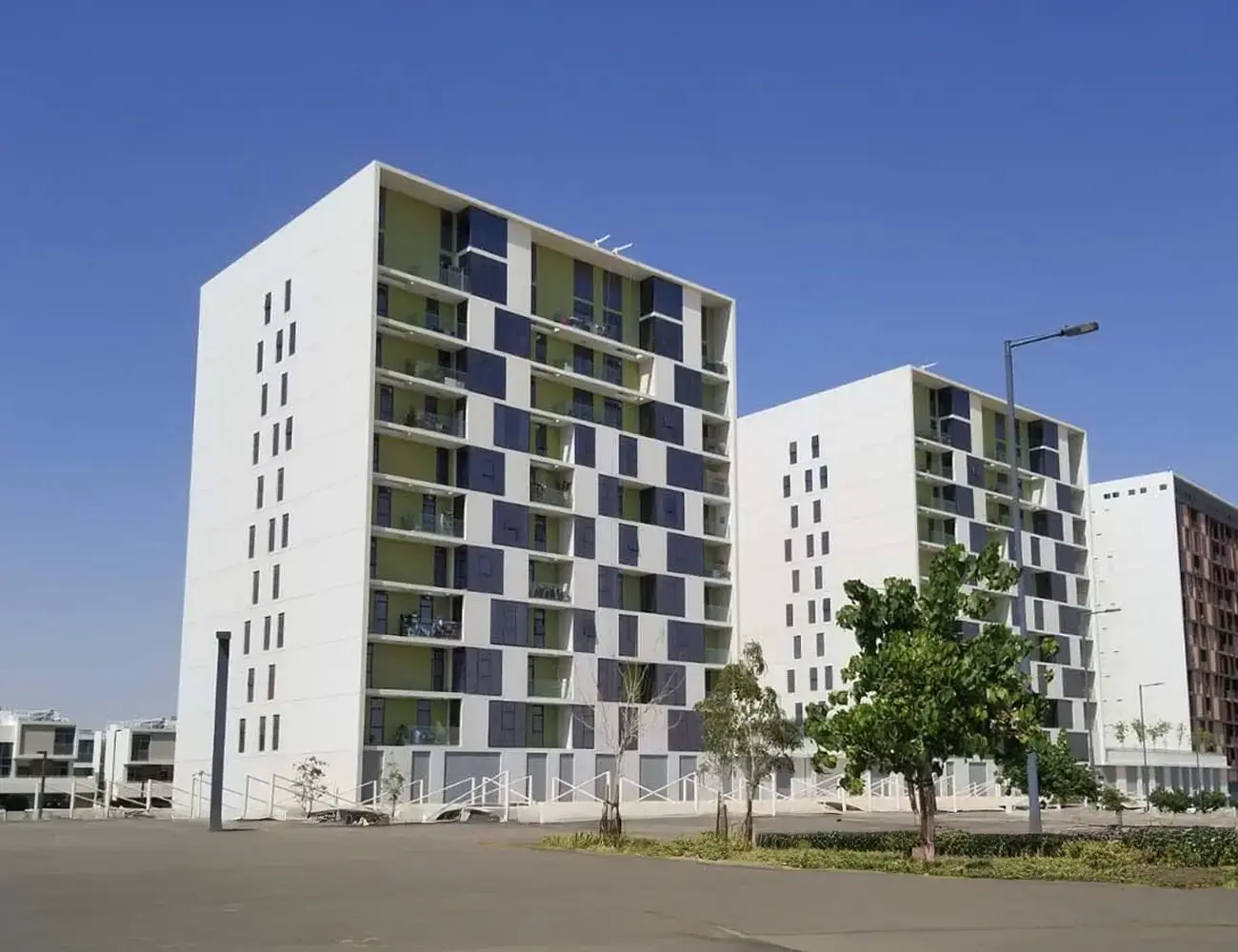
THE THESIS
We are actively evaluating and acquiring development sites in key locations selected for their connectivity, affordability profile, and long-term demand characteristics.
The UAE Government's 2040 Urban Master Plan explicitly supports the development of affordable and labour housing. Investing in this segment is not contrarian - it is aligned with the stated strategic direction of the country's leadership.
Dubai's population is growing. The workforce segment - the primary tenant cohort for Namexus developments - is growing fastest. This creates a structural, long-term demand driver that is largely independent of economic cycles.
Larger developers have historically ignored this segment in favour of higher-margin luxury projects. Namexus Holdings is positioned to capture this opportunity with a disciplined, scalable model before the market corrects the imbalance.
